The 40-yard dumpster is the biggest container in the lineup, sized for jobs that outgrow the 30-yard ($795) and overwhelm the 20-yard ($695). At roughly 22 feet long, 8 feet wide, and 8 feet tall, a 40-yard roll-off…
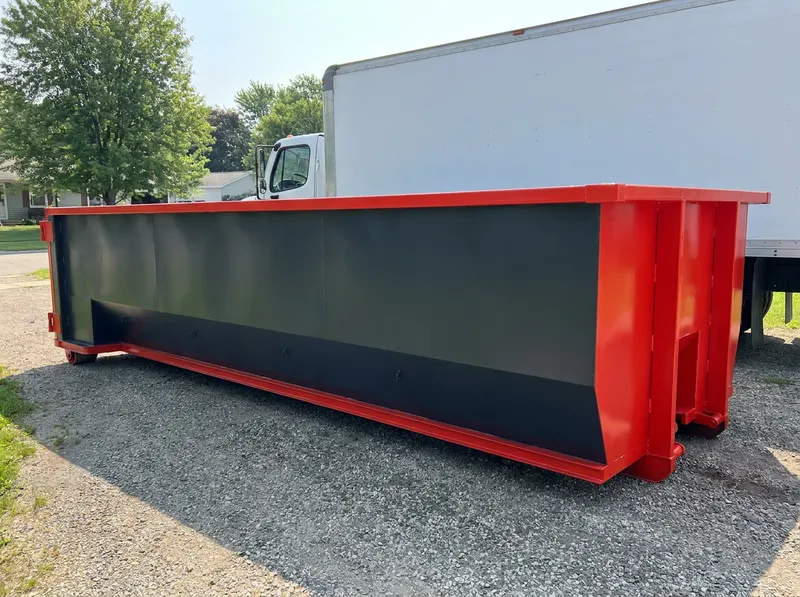
The 40-yard dumpster is the biggest container in the lineup, sized for jobs that outgrow the 30-yard ($795) and overwhelm the 20-yard ($695). At roughly 22 feet long, 8 feet wide, and 8 feet tall, a 40-yard roll-off holds about 16 pickup-truck loads and clears a full four-bedroom cleanout, a two-story deck tear-off, or a basement gut in a single haul. The tall walls make loading bulky, lightweight material simple: furniture, cabinetry, insulation, carpet, and broken-down framing stack high without the weight that forces a swap.
Choosing the 40-yard is a volume decision, not a weight one.
If the debris is dense - concrete, brick, dirt, shingles, or tile - a smaller 10-yard ($595) or 20-yard is the safer fit, because heavy material hits the legal road weight limit long before a 40-yard container looks full. The Michigan Department of Transportation sets axle and gross-weight limits that a loaded roll-off truck has to meet, so a 40-yard packed with masonry can be too heavy to move. If the project is a roof tear-off generating asphalt shingles, step down a size; if it is estate furniture, drywall, and household goods from a Walnut Neighborhood or Colonial Village home, the 40-yard is the match.
For mixed demolition, construction and demolition debris is tracked under EPA construction and demolition material guidance, and separating heavy inert material keeps a 40-yard load legal.
Placement matters on the larger container. A 40-yard needs about 60 feet of straight clearance for the truck to tilt and roll it off, plus a firm, level surface - a driveway, a paved lot, or packed gravel. On narrower Eastside and Baker-Donora streets near older lots, the driver confirms approach room before dropping.
Plywood under the container protects a finished driveway from the concrete or asphalt scuffing that steel rails can cause. A container placed on a public street or in the right-of-way may need a permit; the City of Lansing publishes requirements through the city's public works office, and a bin on private property usually needs none.
Step 1, call (279) 258-6085 with the Lansing address and a short description of the debris. Step 2, the team confirms the 40-yard fits the site and schedules a drop window, often same-day near Moores Park, Churchill Downs, or Westside.
Step 3, the roll-off is delivered on the flat $895 price covering drop-off, the agreed rental period, pickup, and disposal. Step 4, load it from the ground or through the rear swing door, keeping material level with the top rail so it hauls legally. Step 5, call for pickup and the container is removed and the debris taken to a licensed facility; Michigan disposal is regulated by the state's solid-waste program under EGLE.
Some materials never belong in any roll-off: paint, oils, batteries, and other household hazardous waste go to a dedicated collection site, and local recycling and disposal directories list where to take them. Worksite loading follows OSHA jobsite safety practice - keep the walk path clear and do not overload the top rail. For broader waste-reduction context, the National Waste and Recycling Association and solid-waste management standards frame how roll-off debris is handled.
Every job gets a firm, written price after an on-site visit.
Tell us about your 40-yard dumpster rental job in Lansing and we'll send a clear, written quote, usually the same day.
 Trusty Dumpster Rental