The 30-yard roll-off is the largest open-top container most Lansing homeowners need. At about 22 feet long and 6 feet tall, it holds the debris from a full kitchen-and-bath gut, a two-story estate cleanout in Moores…
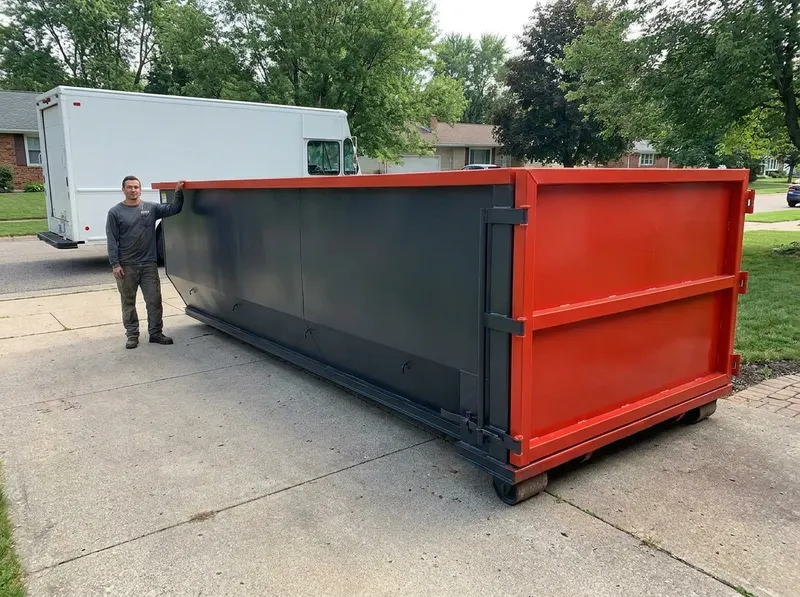
The 30-yard roll-off is the largest open-top container most Lansing homeowners need. At about 22 feet long and 6 feet tall, it holds the debris from a full kitchen-and-bath gut, a two-story estate cleanout in Moores Park, or a shingle tear-off on a Colonial Village ranch. The high walls let a crew toss bulky items, old cabinets, carpet rolls, a sectional sofa, without stacking carefully, which is why contractors on Eastside and Westside job sites reach for this size when the debris is high-volume but not especially heavy.
Decision-fit is a matter of debris volume against driveway space.
A 10-yard ($595) suits a single bathroom remodel, and a 20-yard ($695) covers a mid-size renovation; the 30-yard steps up for a roof tear-off, a garage-and-basement combined cleanout, or a multi-room flooring replacement. The trade-off is footprint: a 30-yard needs roughly a 60-foot clear approach for the delivery truck and a flat spot about 22 feet long, so a short city lot in the Walnut Neighborhood may fit a 20-yard more comfortably. For dense, heavy loads like concrete, brick, or dirt, a smaller box is the safer pick because weight, not space, becomes the limit; the U.S.
EPA construction and demolition materials guidance notes that inert debris is dense and fills a container by weight long before it fills by volume.
Step 1: call (279) 258-6085 and describe the project so the right size is matched. Step 2: pick a drop spot, a driveway protects the surface better than the street, though placement on a Lansing street may require a right-of-way permit from the City of Lansing Public Service Department. Step 3: the container is delivered, often same-day or next-day.
Step 4: load it over your rental period, keeping debris below the fill line so the top stays level for legal, covered transport under federal cargo securement rules. Step 5: call for pickup and the full load is hauled to a permitted facility.
Items banned from the 30-yard follow Michigan rules. Household hazardous waste, paint, oil, batteries, and electronics are kept out, Michigan EGLE directs these to dedicated collection, and Earth911 lists local drop-off points by material.
Tires, appliances with refrigerant, and liquids are also excluded; refrigerant handling is regulated under the EPA Section 608 program. Yard debris can often be diverted to compost rather than landfill, the EPA composting resources and the OSHA construction standards for keeping a jobsite walkway clear both apply when a big bin sits on an active site near Churchill Downs or Baker-Donora. The National Waste & Recycling Association publishes general roll-off handling practices the industry follows.
Every job gets a firm, written price after an on-site visit.
Tell us about your 30-yard dumpster rental job in Lansing and we'll send a clear, written quote, usually the same day.
 Trusty Dumpster Rental